
Online Gambling Statistics
Key Online Gambling Statistics (2026)
Online gambling has expanded rapidly over the past decade as mobile technology, digital payments, and regulatory changes have reshaped how players access casino games and betting platforms.
Millions of people now participate in online gambling worldwide. As more jurisdictions regulate digital gaming platforms, the industry continues to grow and attract new players.
The figures below summarize the most widely referenced statistics describing the modern online gambling industry.
Statistics Snapshot
Global Online Gambling Revenue
More than $95 billion annually
United States Online Gambling Revenue
More than $20 billion annually
Mobile Gambling Share
Approximately 70 to 80 percent of online casino activity
Number of U.S. States with Legal Online Gambling
More than 30 states offer some form of regulated betting
Largest U.S. Online Casino Markets
New Jersey, Pennsylvania, and Michigan
Average Online Casino Player Age
Typically 25 to 44 years old
Most Popular Online Casino Games
Slots, blackjack, roulette, and live dealer games
Online Gambling Share of Global Gambling Market
Approximately 20 percent of total gambling revenue
This snapshot provides a quick overview of the scale and growth of the online gambling industry.
Online Gambling vs Total Gambling Industry Revenue
Online gambling now represents a significant share of the global gambling market. While traditional casinos and lotteries still generate the majority of revenue, digital gambling platforms have grown rapidly over the past decade.
The global gambling industry generates more than $450 billion annually, with online gambling accounting for more than $95 billion of that total (H2 Gambling Capital).
| Gambling Sector | Estimated Annual Revenue |
|---|---|
| Land Based Casinos | $250 billion |
| Lotteries | $120 billion |
| Online Gambling | $95 billion+ |
| Retail Sports Betting | $40 billion |
These figures illustrate how online gambling has evolved into one of the fastest growing segments of the global gaming industry.
Online Gambling Market Growth by Year
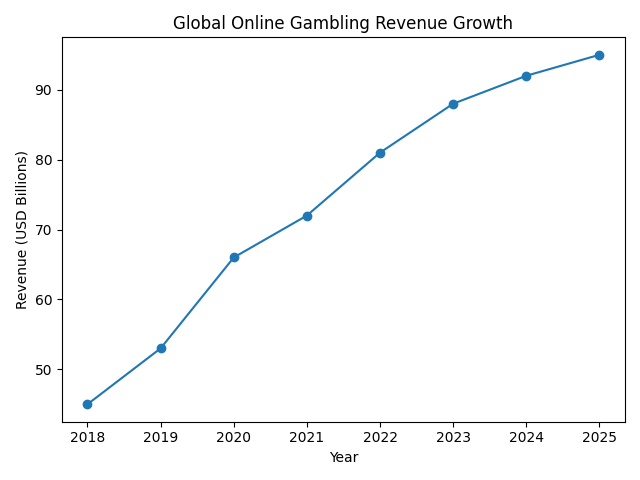
The online gambling industry has experienced consistent growth as mobile gaming, faster internet access, and improved payment systems have made digital casino platforms more accessible (Grand View Research).
The following table illustrates estimated global online gambling revenue growth.
| Year | Estimated Global Online Gambling Revenue |
|---|---|
| 2018 | $45 billion |
| 2019 | $53 billion |
| 2020 | $66 billion |
| 2021 | $72 billion |
| 2022 | $81 billion |
| 2023 | $88 billion |
| 2024 | $92 billion |
| 2025 | $95 billion+ |
Global Online Gambling Revenue Growth
Source: Grand View Research
Largest Regulated Online Casino Markets in the United States
The United States has become one of the fastest growing online gambling markets in the world. State level legislation has allowed several jurisdictions to regulate online casinos and sports betting platforms.
| State | Online Casino Legal | Market Characteristics |
|---|---|---|
| New Jersey | Yes | Early regulated online casino market |
| Pennsylvania | Yes | Large population and strong revenue growth |
| Michigan | Yes | Rapid growth after legalization |
| West Virginia | Yes | Smaller but fully regulated market |
| Connecticut | Yes | Limited operators but growing market |
These states currently generate billions of dollars in online casino revenue each year.
Global Online Gambling Market Size
Online gambling has become a major segment of the global gaming economy. Improvements in payment processing, live streaming technology, and mobile gaming platforms have made casino games accessible to players worldwide.
Industry estimates place global online gambling revenue at more than $95 billion annually, with continued expansion expected as additional jurisdictions regulate online betting (Statista).
Europe remains one of the largest online gambling markets, while North America has experienced significant growth due to state level regulation in the United States.
United States Online Gambling Statistics
The U.S. online gambling market has expanded significantly since several states introduced legal online casino gaming and sports betting platforms.
Current estimates suggest that U.S. online gambling generates more than $20 billion annually (American Gaming Association).
New Jersey, Pennsylvania, and Michigan are currently the largest online casino markets in the country.
As additional states consider legalization, the overall size of the U.S. online gambling market is expected to increase.
Online Casino Player Demographics
Online casino players come from a wide range of backgrounds, but certain demographic trends appear consistently across markets.
Most online casino players fall between the ages of 25 and 44 (UK Gambling Commission), although participation spans several age groups.
Typical characteristics of online casino players include:
• preference for mobile gaming
• short and frequent gambling sessions
• participation in both sports betting and casino games
• interest in fast paced games such as slots
Mobile accessibility has significantly influenced how players interact with casino platforms.
Mobile Gambling Growth
Mobile devices now dominate online gambling activity. Smartphones and tablets allow players to access casino games almost anywhere with an internet connection.
Industry estimates suggest that 70 to 80 percent of online gambling activity occurs on mobile devices (Statista).
Casino operators increasingly design platforms specifically for mobile screens to provide smoother gameplay and easier navigation.
Most Popular Online Casino Games
Slots remain the most popular online casino games because they are easy to play and available in thousands of variations.
Other popular online casino games include:
• blackjack
• roulette
• video poker
• live dealer games
Live dealer games have grown significantly as streaming technology has improved, allowing players to interact with real dealers through live video.
Responsible Gambling and Player Protection
Responsible gambling programs are an important part of regulated online casino markets. Many jurisdictions require operators to provide tools that help players control their gambling activity (UK Gambling Commission).
Common responsible gambling features include:
• deposit limits
• session limits
• self exclusion programs
• identity verification procedures
• access to responsible gambling resources
These safeguards help ensure that online gambling remains a form of entertainment rather than a financial risk.
Future Growth of Online Gambling
Industry analysts expect online gambling to continue expanding throughout the remainder of the decade.
Several factors will likely drive future growth:
• expanded legalization in new jurisdictions
• improvements in live dealer streaming technology
• continued growth of mobile gaming
• faster and more secure payment processing
As regulation evolves and technology advances, online casinos will remain a significant part of the global entertainment industry.
Online Casino Reviews and Guides
Players researching online casinos often compare multiple platforms before deciding where to play.
Evaluating factors such as bonus terms, payment methods, and game selection can help players better understand how different casino platforms operate.
Readers interested in comparing casino platforms can visit our Online Casino Reviews page for detailed breakdowns of casino features, bonuses, and withdrawal policies.
FAQ
How large is the online gambling industry?
The global online gambling industry generates more than $95 billion annually and continues to grow as digital betting platforms expand worldwide.
How much revenue does online gambling generate in the United States?
The United States online gambling market generates more than $20 billion annually across online casinos and sports betting platforms.
What percentage of gambling happens on mobile devices?
More than 70 percent of online gambling activity occurs on mobile devices such as smartphones and tablets.
Which states allow online casino gambling?
Several states allow regulated online casino gaming including New Jersey, Pennsylvania, Michigan, West Virginia, and Connecticut.
Was this helpful?