
Curaçao spent years promising that its new gambling laws would clean up one of the largest offshore casino licensing markets in the world. Less than two years later, there are already questions about how much has actually changed.
A new international investigation into Curaçao’s gambling industry has found more than 600 licenses operating under the island’s new system, with sources estimating that more than 10,000 gambling domains are now connected to Curaçao licenses.
Investigators also visited addresses associated with licensed gambling companies and reported finding empty or apparently abandoned offices. At one abandoned property, they said they found correspondence from players in Germany and Austria complaining about unpaid winnings.
None of that means every Curaçao licensed casino is operating improperly. The new licensing system also contains significantly more regulatory requirements than the system it replaced.
But it does raise an important question for players: what does a Curaçao gambling license actually tell you about an online casino in 2026?
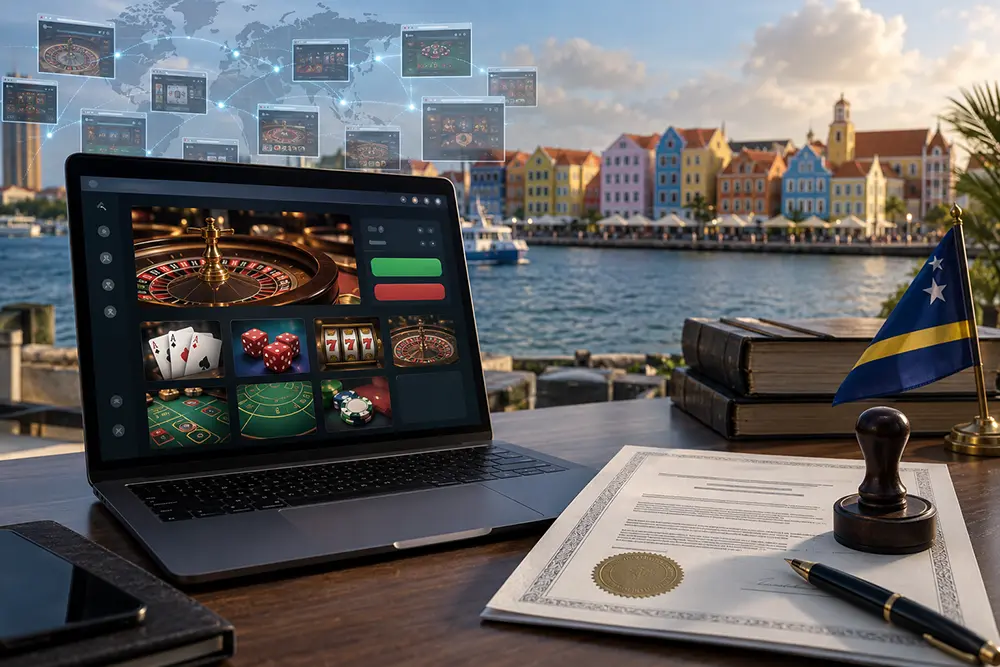
Curaçao was supposed to leave its old licensing system behind
Curaçao has been one of the biggest countries in offshore online gambling for decades, but its old licensing system did not have a particularly strong reputation.
Under the previous model, a small number of master license holders could issue sublicenses to online casinos and sportsbooks. That allowed a huge number of gambling sites to operate under Curaçao licensing without dealing directly with the government regulator.
The system was cheap and accessible, which helped turn Curaçao into a major hub for offshore gambling. It also created obvious problems.
Oversight could vary significantly between operators, ownership structures were not always transparent and players sometimes had limited options when disputes arose.
That system was eventually replaced by the Landsverordening op de Kansspelen, better known as the LOK, which came into force in December 2024.
The change was substantial on paper.
Instead of operating under sublicenses issued by private master license holders, gambling companies now have to obtain licenses directly through the Curaçao Gaming Authority.
The CGA was also given responsibility for supervising the online gambling industry, including compliance with anti money laundering and counter terrorism financing requirements.
The goal was to turn a licensing jurisdiction known for easy access into something that looked much more like a conventional gambling regulator.
More than 600 licenses have already been issued
The size of the new market shows just how important Curaçao remains to offshore gambling.
According to information obtained by Play the Game, 617 licenses had been granted under the LOK by the end of July 2026.
Sources cited by the investigation estimate that more than 10,000 gambling domains are connected to Curaçao licenses.
That second number should be treated differently from the license count. It is an estimate from sources rather than an official figure published by the Curaçao Gaming Authority. Still, the CGA’s own rules make it possible for a single license holder to operate multiple approved domains.
Adding another domain to a license currently carries a €250 administrative fee.
That means the number of individual casino and sportsbook websites operating under Curaçao regulation can be much larger than the number of companies holding licenses.
For players, that distinction matters.
Seeing two casinos with Curaçao licenses does not necessarily mean they are two completely separate gambling businesses. Multiple brands and domains can ultimately sit under the same licensed company.
Investigators found empty offices at some registered addresses
One of the more concerning parts of the investigation involved the physical presence of gambling businesses in Curaçao.
Play the Game reported visiting addresses connected to gambling companies and finding some offices empty or apparently abandoned.
The investigation also examined the continued use of local trust companies, which can act as directors or representatives for gambling businesses based elsewhere.
That does not automatically indicate wrongdoing. International companies commonly use corporate service providers when establishing businesses in foreign jurisdictions.
The concern is whether those structures make it more difficult to determine who actually controls a gambling operation and where its money ultimately goes.
That issue is particularly important in an industry where a casino may be licensed in Curaçao, operated by people living elsewhere and accepting customers from dozens of different countries.
The CGA says it examines corporate structures, ultimate beneficial owners and the people responsible for managing gambling businesses when considering license applications.
Its licensing rules also allow applications to be rejected when ownership cannot be sufficiently established or when the source of money funding an operation cannot be traced.
Those are meaningful differences from the reputation Curaçao developed under its old licensing system.
The question is how effectively those standards can be enforced across such a large offshore industry.
A Curaçao license does not give a casino permission to operate everywhere
This is probably the most important distinction for players to understand.
A Curaçao license allows an operator to conduct online gambling from Curaçao. It does not automatically give that casino permission to accept players in every country.
The CGA itself says license holders are expected to comply with the laws of the countries where they operate.
That becomes particularly relevant in the United States.
A Curaçao licensed casino is not a state licensed US online casino simply because it holds a legitimate gambling license somewhere else.
Legal online casino markets in states such as New Jersey, Michigan and Pennsylvania operate under their own licensing systems. Operators serving those markets need approval from the relevant state regulator.
Curaçao licensing therefore tells a US player something about where an offshore casino is regulated. It does not mean that casino has been approved by a US gaming regulator.
That distinction is sometimes lost when offshore casinos advertise themselves simply as “licensed and regulated.”
Both statements can technically be true while leaving out the more important question of where that license actually applies.
The new rules are stronger than the old Curaçao system
It would also be unfair to suggest that nothing changed when the LOK arrived.
The new licensing framework includes requirements covering beneficial ownership, source of funds, responsible gambling policies, player liquidity and alternative dispute resolution.
Applicants can be rejected if the CGA cannot establish who ultimately owns the company or where its funding comes from.
Operators must also demonstrate that they have sufficient liquidity to pay player winnings.
The CGA says the objectives of the new system include preventing fraud and money laundering, protecting players and minors, ensuring winnings are paid and preventing gambling addiction.
Those are considerably more explicit standards than Curaçao historically had attached to its offshore gambling industry.
The regulator has also started issuing public warnings about unauthorized websites falsely claiming to operate under active Curaçao licenses, another indication that it is trying to give players a clearer way to verify legitimate operators.
The problem is scale.
More than 600 licenses and potentially thousands of associated gambling websites create a huge supervision job for a regulator overseeing an industry that reaches far beyond a Caribbean island of roughly 150,000 people.
So how much should a Curaçao license mean to players?
A Curaçao license should not be treated as meaningless.
Under the new system, legitimate operators have to apply directly to the CGA and meet requirements that did not exist in the same form under the old sublicense model.
Players can also verify whether a casino’s domain is actually connected to an approved license rather than simply trusting a Curaçao logo displayed in the footer of a website.
But a license should not be treated as a guarantee either.
The investigation published this month shows why checking the regulator is only one part of evaluating an offshore casino. Ownership, withdrawal history, payment policies, customer complaints and the rules governing players in their own jurisdiction still matter.
That is especially true for US players.
A Curaçao license and a US state gambling license are not interchangeable. They represent two very different regulatory systems with different enforcement powers and different protections available when something goes wrong.
Curaçao’s new gambling law was designed to improve the reputation of its offshore industry. On paper, it has clearly created a more substantial licensing system than the one it replaced.
The real test is whether the Curaçao Gaming Authority can enforce those standards across hundreds of license holders and potentially thousands of gambling websites.
Less than two years into the new system, that question is still being answered.
Last Updated: 14 hours ago