
Less than two years later, one of the biggest parts of that market could disappear.
The Brazilian government is preparing a measure that would ban online casino games while allowing regulated sports betting to continue, according to Reuters. The proposal has not yet become law, but it would represent a major reversal for one of the largest newly regulated gambling markets in the world.
The timing is what makes this particularly interesting.
Brazil did not simply tolerate online casinos and then decide to crack down. It created a licensing system that specifically allowed online games, charged operators substantial fees to participate and built a regulatory structure around the industry.
Now those same operators could lose a major part of the business they paid to enter.
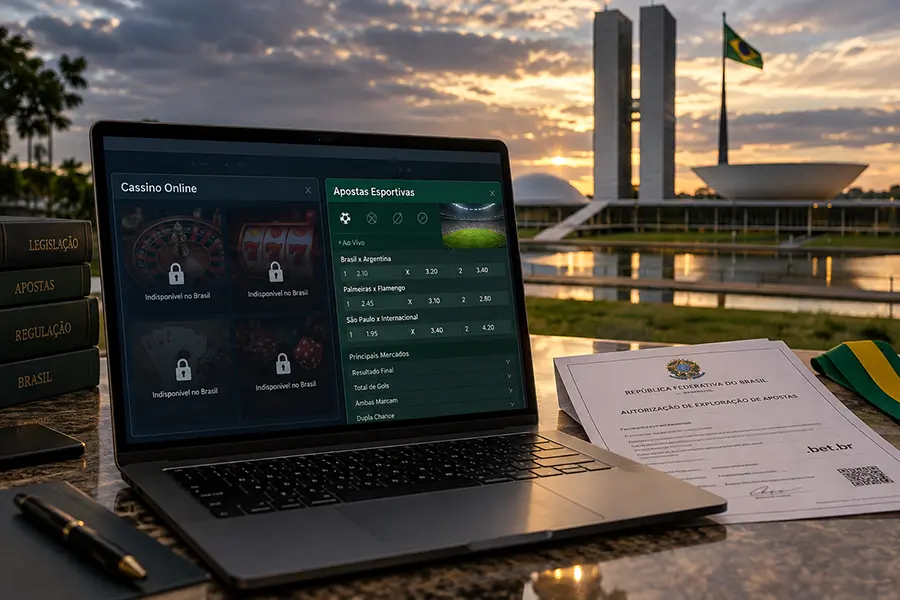
Brazil only launched its regulated market in 2025
Brazil’s current system took effect on January 1, 2025.
Since then, operators that want to legally serve the national market have needed authorization from the country’s Secretariat of Prizes and Betting. Authorized sites operate using government controlled .bet.br domains, making it relatively easy for players to distinguish a licensed platform from an unauthorized one.
The system covers both fixed odds sports betting and approved online casino games.
That was a significant change for Brazil. Instead of leaving online gambling largely outside a formal national framework, the government created a market where operators could obtain authorization, pay taxes and operate under a defined set of rules.
The financial impact has already been substantial.
Reuters reports that the Brazilian government collected nearly R$10 billion, or approximately $1.95 billion, from gambling licensing fees and taxes during 2025.
There are currently 188 authorized betting brands operating within the federal system.
Those numbers make the possibility of an online casino ban much more complicated than simply deciding that Brazil no longer wants casino games.
The government has already built a regulated market around them.
Online casino games are a major part of operator revenue
For licensed operators, removing online casino games would fundamentally change the economics of the Brazilian market.
Industry estimates cited by Reuters suggest casino games account for a large majority of revenue for some operators. The exact percentage varies between companies, but the important point is that many entered Brazil expecting to operate both sports betting and casino products.
Sportsbooks and online casinos also work differently from a business perspective.
Sports betting is heavily influenced by the sporting calendar, major events and margins on individual markets. Casino games provide a more continuous source of activity throughout the year.
Removing that side of the business would leave operators with licenses that look considerably different from the ones they originally paid for.
That is why the industry is already raising the possibility of legal action.
Industry groups have estimated that compensation claims could potentially reach R$120 billion if the government changes the rules after operators invested in the regulated market.
That figure should be treated as an industry estimate rather than a prediction of what Brazil would actually have to pay. Any compensation would ultimately depend on the final measure, existing licensing agreements and how Brazilian courts interpret the change.
But the possibility of litigation is real.
Brazil has been moving in the opposite direction
The proposed ban also comes at an unusual time because Brazil has recently strengthened its regulated gambling system rather than dismantling it.
Just days before reports of the potential casino ban emerged, the Secretariat of Prizes and Betting introduced new procedures designed to attack the financial infrastructure used by unauthorized betting operators.
The rules allow authorities to identify payment methods connected to illegal gambling, interrupt transactions and block accounts associated with unauthorized operators.
That is a significant development because blocking a gambling website is relatively easy to get around. Cutting off the movement of money is considerably more difficult.
Brazil has therefore been moving toward a system where licensed operators are increasingly separated from the offshore and unauthorized market through domains, payment controls and government oversight.
A ban on online casino games would create a new question.
What happens to the demand for those games?
Players are unlikely to simply stop playing casino games
This may become the biggest issue if Brazil actually follows through with the proposal.
Online casino games already have an established audience in the country. Removing them from licensed platforms does not necessarily mean that demand disappears with them.
Players who currently use regulated .bet.br sites would have fewer legal options, while offshore and unauthorized casinos would still have an incentive to target the Brazilian market.
That could put the government in the unusual position of strengthening enforcement against unauthorized gambling while simultaneously removing a product from the legal market that players are already using.
The outcome would depend heavily on enforcement.
If Brazil can effectively block payments, websites and access to unauthorized casinos, a prohibition could reduce overall casino activity. If players can still easily reach offshore platforms, however, some of the existing market could simply move outside the regulated system.
That is one of the arguments licensed operators are likely to make as the proposal develops.
It is also why the next steps matter more than the initial announcement.
Sports betting would remain legal
The proposal being discussed does not amount to a complete reversal of gambling regulation in Brazil.
Sports betting would remain legal under the regulated system.
That would leave Brazil with an unusual structure in which licensed sportsbooks could continue taking bets on sporting events but would no longer be able to offer the online casino products that currently sit alongside them.
For some operators, that distinction could determine whether remaining in Brazil still makes financial sense.
The country has already tightened gambling advertising rules and introduced additional player protection measures. Brazil has also built systems capable of monitoring licensed operators and restricting access for certain groups of consumers.
A casino ban would go much further.
Instead of changing how a product can be marketed or who can access it, Brazil would be removing the product from the regulated market entirely.
A major test for Brazil’s gambling experiment
Nothing has been finalized yet.
The Brazilian government is preparing the measure, but the exact language and implementation will determine how significant the change ultimately becomes. There could also be legal challenges from operators that invested under the existing licensing system.
That makes this a story worth watching rather than a completed regulatory shift.
Still, the possibility alone raises a larger question about what happens when governments change direction after creating a regulated gambling market.
Brazil has already collected billions of reais from the industry. Operators have paid for licenses, built local businesses and moved onto regulated domains. The government has also invested in systems designed to separate those companies from unauthorized competitors.
Removing online casinos now would not return Brazil to the market that existed before regulation.
It would create a new one.
Sports betting would remain inside the regulated system, while demand for online casino games would have to go somewhere else.
Whether that means fewer people playing casino games or more players moving toward offshore alternatives may ultimately determine whether a ban achieves what the government wants.
Last Updated: 16 hours ago