Florida is expanding its fight against sweepstakes casinos, but the latest move is not aimed directly at the casino operators. Attorney General James Uthmeier has sent letters to Google, Meta, Reddit, Snap and TikTok demanding that the companies stop advertising sweepstakes casino platforms to Florida residents. The companies have until October 23 to explain what they are doing to prevent those advertisements from appearing in the state.
The move is part of a broader strategy that has been developing for several months. Florida has already filed lawsuits targeting Stake and VGW, the company behind Chumba Casino, LuckyLand and Global Poker, while also naming several payment companies connected to the platforms. By adding some of the world’s largest advertising and social media companies to the pressure campaign, Florida is increasingly focusing on the infrastructure that allows sweepstakes casinos to reach players and process their money.
That makes this more significant than another cease and desist letter sent to an individual operator. If Florida can make it harder for sweepstakes casinos to advertise and process transactions, the state could potentially restrict the industry without having to chase every individual website operating within its borders.
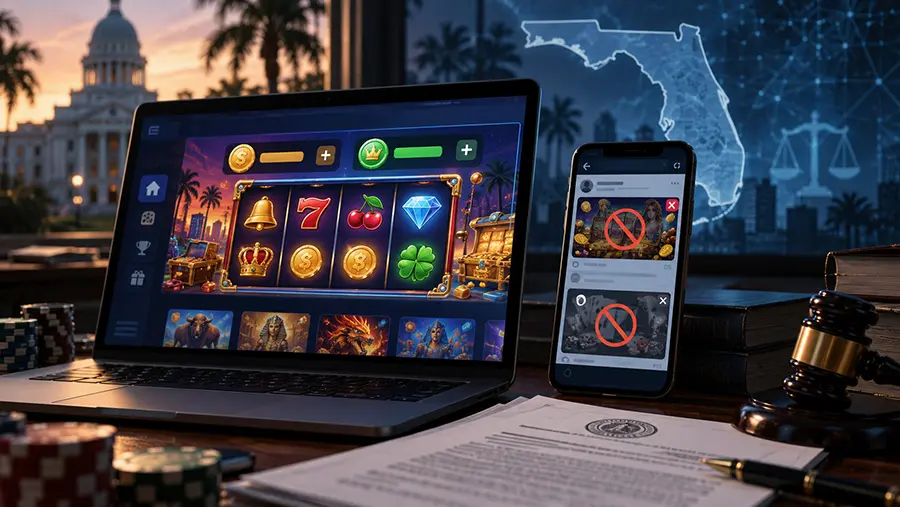
Florida wants sweepstakes casino ads removed
Uthmeier sent the latest letters after his office said it learned that advertisements for sweepstakes casinos were still being shown to Florida residents. The letters went to Google, Meta, Reddit, Snap and TikTok, putting several of the largest digital advertising and social media platforms in the country on notice.
Florida’s position is that companies should not be helping promote platforms the state believes are offering unauthorized gambling. The Attorney General’s office has already accused Stake, Chumba Casino, LuckyLand and Global Poker of violating Florida gambling law through their use of redeemable virtual currencies.
The technology companies have been given until October 23 to respond and explain what measures they will take to prevent those advertisements from reaching Florida users. That is an important distinction because Florida is not simply asking the companies to remove a handful of specific ads. The state is pushing them to address how sweepstakes casinos are able to advertise to Florida residents across their platforms in the first place.
If those companies comply with the request broadly, the impact could extend beyond the specific advertisements that triggered the letters. Google, Facebook, Instagram, TikTok, Snapchat and Reddit represent some of the largest customer acquisition channels available online, and losing access to them in a state the size of Florida could make it considerably harder for sweepstakes operators to attract new players.
The crackdown started with Stake and VGW
Florida’s campaign became much more aggressive in August when the Attorney General filed separate lawsuits involving Stake and VGW. The VGW case targets Chumba Casino, LuckyLand and Global Poker, while another lawsuit challenges Stake’s sweepstakes gaming operation.
At the center of those cases is the dual currency system commonly used by sweepstakes casinos. Players generally use one form of virtual currency, often called Gold Coins, that has no cash redemption value. A second currency, usually called Sweeps Coins or something similar, can be used to play casino style games and may eventually be redeemed for cash or prizes after the platform’s requirements are satisfied.
Sweepstakes operators have historically distinguished this model from conventional online gambling by pointing out that the redeemable currency can be obtained without making a purchase. Florida is challenging that distinction and argues that the way the system functions amounts to unauthorized gambling under existing state law.
Those allegations have not yet been finally decided by a court. That is important because Florida’s current campaign is based on the state’s interpretation of its gambling laws, while the operators and the wider sweepstakes industry have maintained that properly structured promotional sweepstakes are legally different from traditional real money casinos.
Florida is also targeting payment companies
One of the most interesting parts of Florida’s earlier lawsuits is that the state did not stop with the casino operators. Payment companies were also named in the litigation, including businesses involved in moving money between players and the sweepstakes platforms.
That approach provides important context for the new advertising demands. Florida appears to be looking beyond the casino website itself and focusing on the businesses that make the model possible. A sweepstakes casino still needs ways to accept payments, return money to customers and consistently acquire new users, regardless of how its games or virtual currencies are structured.
Payment processing is particularly important because losing access to established providers can make operating much more difficult. Alternative payment methods may exist, but major processors provide the infrastructure that allows transactions to happen conveniently and at scale.
Advertising serves a similar role. A platform may still technically be accessible in Florida, but its growth becomes much more difficult if it cannot reach potential customers through search results, social media advertising and other major digital channels.
By targeting both areas, Florida is applying pressure at two of the most important points in the sweepstakes casino business model.
Advertising could become a major pressure point
Sweepstakes casinos have grown rapidly in the United States partly because they have historically been able to reach customers across a much larger number of states than regulated real money online casinos. Traditional online casino gambling remains legal in only a small number of states, while sweepstakes platforms have operated much more broadly under the argument that their promotional model does not constitute conventional gambling.
That makes digital marketing particularly valuable. A sweepstakes operator does not need a physical casino or even a regulated online casino market to find potential players. Advertising through search engines, social networks and other online platforms can introduce the product directly to people in states where conventional iGaming is unavailable.
Florida is now trying to disrupt that advantage. If the major technology companies decide to restrict sweepstakes casino advertising in the state, operators could lose access to some of their most efficient ways of reaching new customers.
There could also be an effect beyond Florida. Large advertising platforms generally prefer rules that can be applied consistently rather than making complicated legal determinations about individual gambling products in every state. If sweepstakes casino advertising becomes an increasing regulatory concern, platforms may eventually decide to impose broader restrictions of their own.
That has not happened yet, and the responses due in October will give us a better idea of how seriously the technology companies intend to treat Florida’s demands. Still, the possibility makes this a much more important development than another enforcement letter directed at one casino.
Florida never passed a specific sweepstakes casino ban
Another reason Florida’s approach is worth watching is that the state has not followed the same path as some other jurisdictions. Lawmakers considered legislation that would have specifically targeted sweepstakes casinos, but those efforts did not result in the type of explicit statewide ban adopted elsewhere.
The lack of a new law has not stopped the Attorney General from acting. Florida is instead relying on existing gambling and consumer protection laws to argue that certain dual currency casino models are already prohibited.
That raises one of the biggest legal questions surrounding sweepstakes casinos in the United States. Do states actually need to pass new laws specifically addressing sweepstakes gaming, or can regulators use gambling statutes that were already on the books?
Florida is testing the second approach. The state’s argument is essentially that the label attached to the product matters less than how it actually works. If players spend money and can receive something of value based on the outcome of casino style games, Florida believes existing gambling laws can apply.
The lawsuits against Stake and VGW should eventually provide more clarity on that argument. Until then, Florida is continuing to apply pressure without waiting for a final ruling.
The crackdown is moving beyond casino operators
This is where Florida’s strategy becomes particularly interesting for the rest of the sweepstakes industry. Going after individual casino sites can become a lengthy process, especially when operators are based outside the state or use complicated corporate structures.
The companies surrounding those casinos can be easier pressure points. Major payment processors, advertising networks, app stores and technology companies operate across the wider US economy and generally have much more to lose from a prolonged dispute with regulators.
If Google or Meta concludes that carrying certain sweepstakes casino advertisements in Florida creates unnecessary legal risk, the operator does not necessarily need to lose a court case before it feels the effect. The advertising platform can simply decide that the business is not worth the compliance problem.
The same applies to payments. If processors become uncomfortable servicing sweepstakes casinos because they are being named in state lawsuits, operators could find it harder to maintain convenient deposit and withdrawal options even before the underlying legal questions are settled.
Florida therefore appears to be building a strategy that attacks the sweepstakes casino model from several directions at once. The state is challenging the operators, questioning the companies moving their money and now putting pressure on the platforms responsible for helping them find customers.
Other states could follow Florida’s approach
Sweepstakes casinos are already facing a considerably different regulatory environment than they were a few years ago. Some states have passed specific laws restricting the model, while others have issued cease and desist orders or used existing gambling laws to pursue operators.
Florida could provide another blueprint if its approach proves effective. Rather than waiting for lawmakers to pass a dedicated sweepstakes casino ban, attorneys general could potentially use existing laws while simultaneously pressuring advertising platforms and payment providers to distance themselves from the industry.
That does not mean those third party companies are automatically responsible for the activities of the casinos they serve. Their legal obligations are separate questions, and Florida’s allegations against Stake and VGW remain contested.
The practical impact could still be substantial. Sweepstakes casinos depend on many of the same outside services as any other large online business. Restricting access to those services can sometimes be more disruptive than blocking a website or sending another cease and desist letter.
For that reason, the next important date is October 23. Google, Meta, Reddit, Snap and TikTok have until then to respond to Florida and explain what they intend to do about sweepstakes casino advertising in the state.
Their answers could determine whether this remains another regulatory warning or becomes something much more consequential. If the major platforms begin restricting sweepstakes advertising in Florida, the state will have found a new way to put pressure on the industry without first passing a dedicated ban or waiting for its lawsuits against the operators to reach a final judgment.
That is what makes Florida’s latest move worth watching. The state is no longer focused solely on whether individual sweepstakes casinos should be allowed to operate. It is increasingly targeting the broader system that allows those casinos to reach players and move their money, and that strategy could ultimately prove much harder for the industry to work around.
Last Updated: 10 minutes ago