
Wimbledon is the Grand Slam where the betting market can look familiar and still behave very differently from the other majors.
That is what makes it attractive and dangerous at the same time.
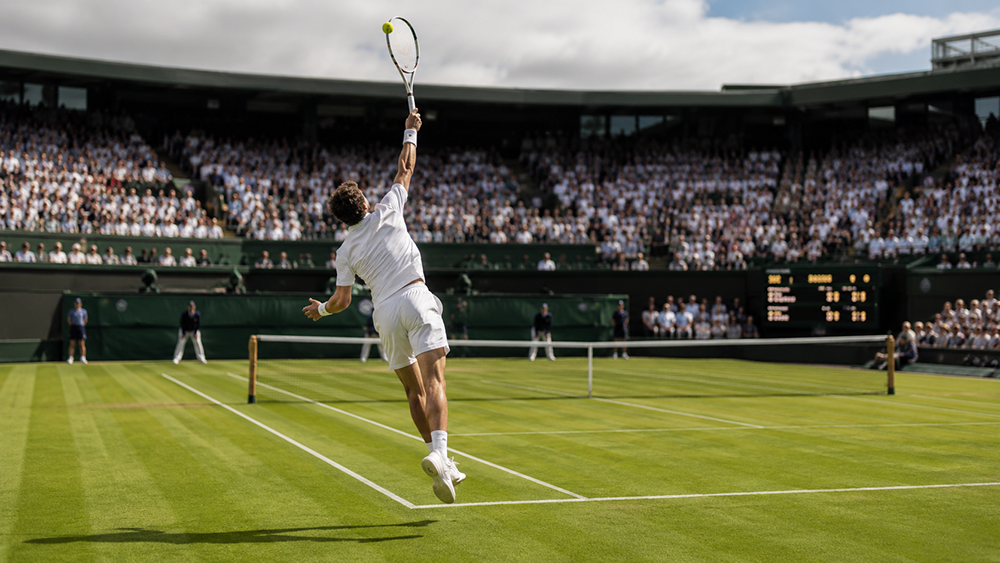
The names at the top still matter. The rankings still matter. Recent form still matters. But grass changes the way those things interact. Matches get shorter. Servers get more protection. Sets can swing faster. Underdogs stay alive longer when they hold comfortably. Big names can look less secure than they do on slower surfaces, even when they still deserve to be favored.
That is why Wimbledon is not just a tournament for outright betting. It is one of the best events on the calendar for comparing draw shape, round-by-round value, set markets, live betting, and the kinds of early round matchups where the public sees one thing and the surface says another.
If you are only posting one Wimbledon article, that is the angle to take. Not just who can win it, but where the best betting opportunities tend to show up once the grass starts doing its work.
The men’s outright market starts with Sinner, but the draw is doing real work
The headline on the men’s side is simple. Jannik Sinner is defending champion, but Novak Djokovic landed in his half of the draw.
That matters because outright betting at Wimbledon is never just about who the best player is. It is about who has the cleaner path, who fits the surface, and whether the number still makes sense once you stop looking at the ranking and start looking at the route.
Sinner deserves serious respect. Defending champions always do, and he comes in with the kind of status the market tends to trust. But being the strongest player on paper and being the best outright price are not automatically the same thing. If the more dangerous half of the bracket runs through Djokovic and other awkward grass-court matchups, then the market needs to pay you properly for that risk.
That is the first outright lesson at Wimbledon. Path matters more here than casual bettors often admit. The gap between a good favorite and a good outright bet is usually wider than it looks.
Djokovic still matters because Wimbledon has always rewarded proven grass-court control
This is where the public can split into two bad habits.
One group overbets Djokovic because of the name and the history. The other group fades him too hard because they want to bet on the future instead of the proven Wimbledon profile in front of them.
Both mistakes happen every year in some form.
Wimbledon has always been the Slam where comfort on grass, serve protection, and match management matter enough to keep elite veterans dangerous longer than people expect. That does not mean Djokovic should be backed blindly. It means writing him off because the market prefers newer names is just as lazy as backing him at a bad number because he has done it before.
At Wimbledon, proven grass-court players deserve more respect than they usually get in pre-tournament hot-take culture. That matters in the outrights, but it also matters in the later rounds when the market starts pricing age and recent headlines more aggressively than actual surface fit.
The women’s outright market is more open, which makes price more important
The women’s side is where Wimbledon usually creates more betting opportunity because the path to the title is less stable and the match-to-match volatility is higher.
Aryna Sabalenka deserves her place near the top of the market, especially with the power game and first-strike style that can work so well on grass. But Wimbledon has a way of making the women’s draw feel more fragile than the rankings suggest. One tough opener, one uncomfortable matchup, one poor serving day, and the whole price can look different.
That is what makes the women’s outright board more interesting but also harder to play lazily.
This is where bettors need to think about whether they are backing the most likely winner or the most attractive number. Those are not always the same thing. The women’s bracket is often where a slightly less fashionable contender can become more appealing outright because the market has leaned too hard toward one or two bigger names.
That does not mean spraying outrights all over the board. It means recognizing that Wimbledon on the women’s side is usually one of the better places to demand a stronger price before buying into the obvious favorite.
Why early round betting is often better than outright betting
A lot of Wimbledon value shows up before the bracket has time to settle.
That is because public money tends to flow too heavily toward recognizable names in the first week. Top players, former finalists, and recent Slam names attract attention even when the actual matchup is less straightforward than the surface-level narrative suggests.
Grass makes that worse.
A player does not need to be better overall to become live on grass. They need to protect serve, stay comfortable in short exchanges, and avoid letting the match turn into a baseline grind. If they can do that, they can stay in sets longer than the market expects and push favorites into much tighter matches than the rankings suggest.
This is why the first three rounds are often where Wimbledon produces the best betting angles. Not because the favorites are fake, but because the market often prices them as if the surface does not change the shape of the matchup enough.
Sometimes it does.
The best underdog bets are usually not random longshots
This is another mistake bettors make at Wimbledon. They assume grass means chaos and start grabbing every plus-money name they can find.
That is not the right read.
The best underdog bets are usually not random outsiders. They are players whose games fit grass better than the market is pricing. That usually means some mix of:
- strong serve quality
- comfort taking the ball early
- ability to finish points quickly
- willingness to keep rallies short
- decent movement on grass
- enough confidence to hold repeatedly and stay in the match
That kind of player becomes dangerous here even if they are not a true title contender.
At Wimbledon, the smart underdog angle is usually not “grass is weird.” It is “this matchup is tighter on grass than it would be anywhere else.”
That is a much better filter.
Set betting and game spreads are often stronger than moneyline betting
This is one of the most useful Wimbledon angles and one of the most overlooked.
A favorite can still be the right side and still be the wrong moneyline bet.
Grass protects serve better than slower surfaces, which means underdogs often have a better chance to keep one or two sets close even if they are still expected to lose the match. That makes game spreads, first-set markets, over games, and exact set scores more attractive than simply betting a favorite at a short price.
This matters most when a top player is facing someone who can serve well enough to hold repeatedly but may not be complete enough to win the match. Those are often the spots where the favorite advances, but the cleanest betting angle is not the straight moneyline. It is the set market, the over, or a game handicap.
That is a much smarter way to approach early Wimbledon favorites than just parlaying big names and hoping the surface does not matter.
Tie-break and over markets become more interesting on grass
Wimbledon is always one of the best tournaments to watch for tie-break and total-games angles because grass increases the number of matches where both players can hold for long stretches.
That does not mean every match should be played to the over. It means the threshold for a close-looking set is lower than many casual bettors think.
If both players can serve and the return edge is limited, a set can stay on track for a tie-break even when the better player is clearly more likely to win the match overall. That creates some of the cleaner niche markets at Wimbledon:
- first set over
- match over
- tie-break in match
- favorite to win but over games
- underdog to win a set
These angles usually become strongest when you have one clear better player against an opponent who is still strong enough on serve to stop the match from becoming routine.
Live betting matters more here because grass reveals discomfort quickly
Live betting at Wimbledon can be better than pre-match betting if you know what to watch.
Grass exposes discomfort fast.
A player either looks balanced and confident on the surface or they do not. A serve is either landing well enough to control games or it is not. A returner either looks like they can create pressure or they are just hoping for errors. Those signals tend to show up early.
That makes Wimbledon especially good for in-play betting when a match is less familiar or when the pre-match number is being driven by reputation more than current grass-court reality.
Some of the strongest live angles come from seeing:
- whether the favorite is actually returning well enough to justify the price
- whether the underdog’s serve is stronger than expected
- whether movement on grass looks natural or awkward
- whether one player is struggling to shorten points
- whether the match is heading toward long service holds
This is the stage where the eye test actually matters. Grass gives you useful information quickly if you know what you are looking for.
Futures beyond the title market can be stronger than outright winner bets
If you want a futures angle without forcing a full tournament outright, Wimbledon often rewards narrower positions.
That can mean:
- quarter winner
- half winner
- reach the semi-finals
- player to make the second week
- player to win a section
Those markets can be better than full outrights because they let you isolate the draw shape without forcing a full two-week position on a player who may still have title limitations.
This matters most in a tournament where one half of the draw feels heavier than the other. If a strong player has a clean enough route to the quarter-finals but a difficult championship path after that, the better angle may be tied to section betting rather than the full trophy market.
That is often a smarter way to use draw analysis than trying to force everything into winner odds.
Public names can get overbet, especially in the opening week
This is one of the clearest Wimbledon traps.
A player with a big name, strong ranking, or recent Slam run attracts automatic support even when the actual grass-court matchup is more awkward than it looks. That can make the favorite right and still make the number bad.
This applies to both tours.
The market tends to trust stars because casual money trusts stars. Wimbledon gives you more chances than usual to ask whether the public is paying for real edge or just paying for recognition.
That does not mean fading big names blindly. It means asking whether the line has moved far enough that the value is now sitting somewhere else.
That is one of the most useful habits you can bring into Wimbledon week.
The best Wimbledon betting approach is selective, not constant
This is not a tournament where you need action on every big name.
The smarter approach is usually narrower.
Look for:
- matchups where the market is leaning too hard on ranking
- underdogs whose serve and grass-court profile make them live
- favorites who may still win but are overpriced on the moneyline
- overs where both players can hold consistently
- live spots where surface comfort becomes obvious early
- section markets where the draw is cleaner than the outright price suggests
That is how Wimbledon usually rewards bettors.
The tournament looks traditional, but the betting is rarely as straightforward as the names make it seem.
Final Betting Read
If you are only posting one Wimbledon betting article, the real message should be simple.
Do not treat Wimbledon like a normal Slam with a different color court.
Grass changes match shape, serve protection, and underdog viability fast enough that the best betting opportunities usually sit outside the most obvious headline picks. The men’s outright market starts with Sinner and still has to account for Djokovic and draw pressure. The women’s side is more open, which makes price more important than usual. Early-round betting is often stronger than outrights. Set betting, totals, tie-break angles, and live betting are more useful here than casual bettors tend to realize.
The best player is not always the best bet. The biggest name is not always the right side. And at Wimbledon, the market is often just slow enough to remind you why grass is still the most interesting surface to bet.
Last Updated: 4 months ago