
The 2026 FIFA World Cup was bigger than every tournament that came before it.
Forty eight teams played 104 matches across the United States, Canada and Mexico. The competition stretched across 16 host cities, introduced a new Round of 32 and attracted more than 6.8 million spectators. By the time the final whistle sounded in New Jersey, the tournament had also produced a record 308 goals.
More matches did not always mean better football. The group stage occasionally felt crowded, the qualification rules were difficult to follow and the travel demands placed an unusual burden on players and supporters. Ticket prices also made some of the biggest matches inaccessible to normal fans.
Still, the tournament delivered what a World Cup is supposed to deliver.
There were deep runs from unexpected countries, disappointing exits from traditional powers, major performances from the game’s biggest stars and a final that brought together the defending world champion and the reigning European champion.
Spain ultimately defeated Argentina 1-0 after extra time to win its second World Cup. Ferran Torres scored the winning goal in the 106th minute, completing a tournament in which Spain was not always spectacular but was clearly the most complete team.
Argentina came within one match of becoming the first country since Brazil in 1962 to retain the trophy. Lionel Messi produced another outstanding tournament at 39 years old, but Spain prevented him from creating one final World Cup moment.
The final itself was tense rather than entertaining. The tournament around it was much more memorable.
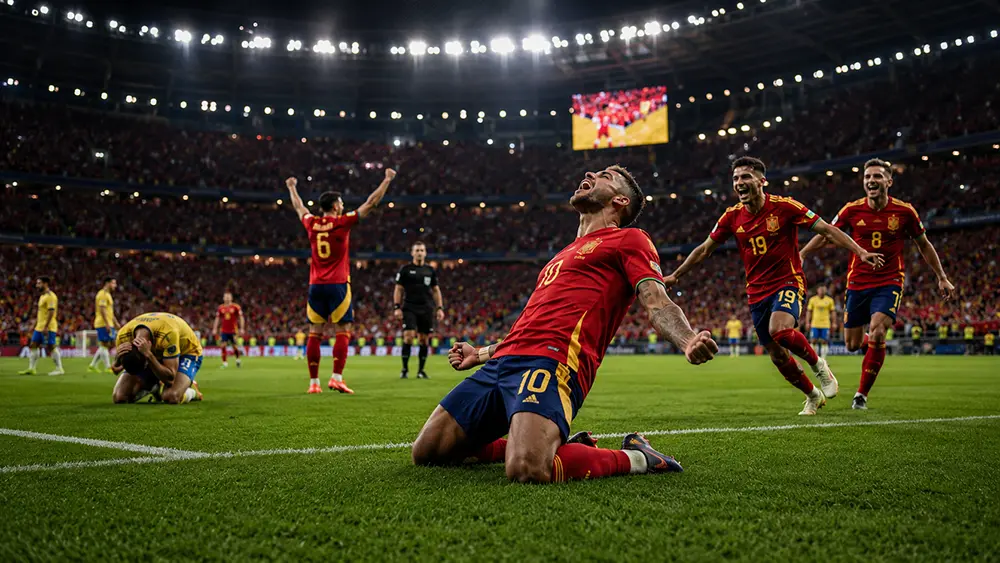
Spain Return to the Top of World Football
Spain entered the World Cup as one of the favorites after winning the 2024 European Championship, but its tournament did not begin with a convincing statement.
The opening match ended in a surprising scoreless draw against Cabo Verde. Spain controlled the ball but struggled to break down a disciplined defense, while Cabo Verde goalkeeper Vozinha produced one of the best individual performances of the group stage.
It would be the last time Spain failed to win.
Luis de la Fuente’s team improved as the tournament continued. Spain became more comfortable playing against defensive opponents, more patient around the penalty area and even more difficult to attack.
The biggest strength was balance.
Lamine Yamal, Nico Williams, Dani Olmo, Mikel Oyarzabal and Ferran Torres gave Spain several different attacking options. Rodri controlled the midfield. Pau Cubarsí developed into one of the tournament’s best defenders, while Unai Simón provided stability in goal.
Spain did not depend on one player to score every important goal. Different players decided different matches, and de la Fuente could change the attack without changing the team’s identity.
That depth separated Spain from Argentina in the final.
It also separated Spain from France, Portugal and Belgium during the knockout rounds.
Spain conceded only one goal across eight matches, setting a new defensive standard for a World Cup champion. The team also extended its unbeaten run to 38 matches and became the first country to hold the men’s and women’s World Cup titles at the same time.
The 2010 Spanish team won through long periods of possession and complete midfield control. The 2026 version kept those principles but played with more speed, width and flexibility.
This was not a copy of the team led by Xavi, Andrés Iniesta and Sergio Busquets.
It was a new Spanish generation winning in its own way.
How Spain Reached the Final
Spain followed the draw against Cabo Verde by taking control of its group and advancing into the first 32 team knockout bracket in World Cup history.
Austria was the first opponent in the Round of 32. Spain won 3-0 and showed the difference between controlling possession and using it with purpose. Oyarzabal scored twice, Pedro Porro added another and Spain advanced without allowing the match to become uncomfortable.
Portugal provided a much more difficult test in the Round of 16.
The match was physical, cautious and decided by a single goal. Spain won 1-0, eliminated Cristiano Ronaldo from what was almost certainly his final World Cup and reached the quarterfinals without having conceded a goal.
Belgium finally scored against Spain in the quarterfinals, but it was not enough. Spain won 2-1 and moved into a semifinal against France, which had won its first six matches and scored 16 goals.
That was supposed to be Spain’s toughest challenge.
Instead, it became Spain’s strongest performance.
Mikel Oyarzabal converted a penalty in the 22nd minute after Lamine Yamal was fouled inside the area. Pedro Porro doubled the lead in the 58th minute, and Spain controlled the rest of the match.
France had Kylian Mbappé, Ousmane Dembélé and Michael Olise in attack, but none of them could consistently find space. Spain controlled midfield, pressed at the right moments and prevented France from turning the semifinal into an open game.
French coach Didier Deschamps admitted afterward that his team had been second best. The 2-0 score did not fully show how comfortable Spain had been.
Spain reached the final having allowed only one goal in seven matches.
By that point, it was clear that Argentina would need more than another Messi moment to beat them.
The Final: Spain 1, Argentina 0 After Extra Time
The final at New York New Jersey Stadium brought together two teams with very different plans.
Spain wanted the ball. Argentina wanted to stop Spain from using it.
Lionel Scaloni set his team up to defend deep, interrupt Spain’s passing and keep the score level for as long as possible. Argentina fouled intelligently, closed the center of the field and relied on Emiliano Martínez whenever Spain found a way through.
For most of the match, the plan worked.
Spain dominated possession and created nearly every meaningful chance, but it struggled to finish. Argentina became the first team in World Cup final history to complete the opening 90 minutes without recording a shot.
Spain finished with 20 attempts, including 12 on target. Argentina officially recorded only two attempts across the entire match and failed to place either one on target.
Martínez was the main reason the final reached extra time.
The Argentina goalkeeper made 12 saves and repeatedly denied Spain from close range. Spain lacked a traditional center forward and often moved the ball into dangerous positions without having anyone prepared to finish the move.
Argentina’s situation became more difficult when Enzo Fernández received his second yellow card late in regulation. Argentina entered extra time with 10 players and almost no attacking threat.
De la Fuente then turned to his bench.
Nico Williams added direct running from the left. Ferran Torres gave Spain a more natural scoring presence inside the penalty area.
In the 106th minute, Pedro Porro sent the ball into the box. Williams kept the move alive and directed it toward Torres, who finished past Martínez.
After nearly two hours of Spanish pressure, the goal finally arrived.
Argentina attempted to respond, but there was not enough left. Messi was surrounded whenever he received the ball, Julián Álvarez was isolated and Spain remained calm through the final minutes.
Tempers flared after the final whistle, with several players becoming involved in a confrontation. It was an ugly ending to a match that had already been tense and physical.
Spain did not care.
Rodri lifted the trophy, Spain became world champion for the second time and de la Fuente became the oldest coach to win the men’s World Cup at 65 years old.
Argentina Come One Match Short of Defending the Trophy
Argentina’s tournament was built on experience, resilience and the continued brilliance of Messi.
The defending champion did not control every knockout match, but it consistently found a way through.
Argentina needed extra time to eliminate Cabo Verde in the Round of 32. The debutant pushed Scaloni’s team much further than expected before Argentina survived 3-2.
Egypt was another difficult opponent in the Round of 16. Argentina advanced, but the match continued a pattern that followed the team throughout the tournament. The defending champion could be placed under pressure, but it rarely lost control emotionally.
Switzerland then pushed Argentina into extra time in the quarterfinals. Once again, Argentina found the decisive moment and advanced.
The semifinal against England was the clearest example of that mentality.
England took the lead through Anthony Gordon in the 55th minute. Thomas Tuchel’s team then dropped deeper and attempted to protect the advantage.
That decision changed the match.
Argentina took control of possession and forced England closer to its own goal. Between Gordon’s opener and Argentina’s winning goal, England had only 12 percent of the possession.
Messi created the equalizer in the 85th minute, finding Enzo Fernández from the right. In stoppage time, Messi delivered again, setting up Lautaro Martínez for the winning header.
Argentina won 2-1 and reached a second consecutive World Cup final.
The comeback showed everything that had made Argentina dangerous. The team stayed patient, trusted Messi and never appeared to believe the match was lost.
That approach was enough against England.
It was not enough against Spain.
Messi’s Final World Cup Run
Messi finished the tournament with eight goals and four assists.
At 39, he no longer covered the same amount of ground or pressed opponents for long periods. Argentina managed his minutes and allowed him to conserve energy for the moments in which he could still decide a match.
Those moments came often.
Messi scored throughout the tournament, created Argentina’s two late goals against England and moved his career World Cup total to 21. He also became only the second player after Cafu to appear in three men’s World Cup finals.
The final was different.
Spain refused to leave Messi isolated against one defender. Rodri and the Spanish back line closed the space between midfield and defense. Whenever Messi received the ball, another defender was already moving toward him.
Argentina also provided almost no movement ahead of him.
Messi could not create a final miracle because Spain never gave him the situation he needed.
The loss does not change his international legacy. Messi delivered Argentina’s third World Cup in 2022, won two Copa América titles and returned four years later to lead his country into another final.
It was not the ending Argentina wanted, but it was still an extraordinary final World Cup run.
England Finish Third but Miss Another Opportunity
England left the tournament with its best finish at a World Cup held outside the country.
That sounds like a major success.
It also does not tell the full story.
England had enough talent to reach the final. Jude Bellingham scored seven goals, Bukayo Saka remained dangerous from the right and Gordon emerged as one of the team’s most effective attacking players.
England also survived difficult knockout matches, including a dramatic 3-2 victory over Mexico and an extra time win against Norway.
The problem came when England took the lead against Argentina.
Instead of continuing to attack, Tuchel changed the shape and asked his team to defend the final portion of the match. England became passive, stopped keeping the ball and invited Argentina forward.
The result was familiar. England moved within minutes of reaching the final before losing control of the match.
The third place game against France showed what England could have been.
England attacked from the opening whistle and built a 4-0 halftime lead. Declan Rice scored in the third minute, Ezri Konsa added the second and Saka scored twice before the break.
France responded with three goals during the second half, including two from Mbappé. Saka completed his hat trick from the penalty spot before Bellingham scored England’s sixth in stoppage time.
England won 6-4 in the highest scoring third place match in World Cup history. It was also England’s first victory in the playoff after previous losses in 1990 and 2018.
Third place was a respectable result.
The frustration is that England’s most aggressive performance came after its chance to win the trophy had already disappeared.
Mbappé Makes World Cup History
France entered the semifinal as one of the strongest teams in the tournament.
Mbappé, Dembélé and Olise gave France more attacking talent than almost every opponent. The team won its first six matches and scored 16 goals before facing Spain.
Spain exposed the weakness beneath the numbers.
France struggled to control midfield and became dependent on its forwards creating chances without enough support. Once Spain stopped those individual runs, Deschamps had no clear alternative.
The 2-0 semifinal loss ended France’s attempt to reach a third consecutive final.
The third place match then became one of the strangest games of the tournament. France trailed England 4-0 at halftime before scoring four times during the second half.
Mbappé scored twice to finish with 10 goals and win the Golden Boot. Those goals also took him to 22 career World Cup goals, moving him ahead of Messi as the leading scorer in men’s World Cup history.
Mbappé has now won one World Cup, reached another final and collected two Golden Boots.
France left without a trophy, but Mbappé left with another record that may stand for a long time.
The United States Show Progress but Fall Short of a Breakthrough
The United States entered its home World Cup with clear expectations.
Reaching the knockout rounds was the minimum. Winning a knockout match was necessary to show progress. Reaching the quarterfinals would have made the tournament feel like a real breakthrough.
The USMNT completed the first two goals.
Mauricio Pochettino’s team finished first in Group D after victories over Paraguay and Australia. The United States then defeated Bosnia and Herzegovina in the Round of 32, earning its first World Cup knockout victory since 2002.
The run ended against Belgium in Seattle.
Belgium took the lead through Charles De Ketelaere in the ninth minute. Malik Tillman equalized from a free kick in the 31st, but the match was level for only two minutes before De Ketelaere scored again.
Hans Vanaken added a third after a goalkeeping error, and Romelu Lukaku completed the 4-1 score in stoppage time.
The United States finished the tournament with 11 goals, the most it has scored at a single World Cup. Pochettino also recorded more World Cup victories than any previous USMNT coach.
Those achievements matter.
The problem is that the Belgium match looked too similar to previous American exits. The United States competed well until the quality of the opponent increased. Defensive mistakes were punished, the midfield struggled to control the match and the attack became less effective under pressure.
The USMNT improved.
It did not make the jump into the group of countries capable of beating elite opponents in knockout matches.
Mexico Give the Home Crowd Something to Believe In
Mexico produced the strongest group stage of the three host nations.
The team played with confidence, used the energy of the home crowds and entered the knockout phase with real momentum. Mexico then recorded its first World Cup knockout victory in 40 years, creating belief that the country might finally reach the quarterfinals again.
England ended that run in the Round of 16.
The match in Mexico City was one of the best knockout games of the tournament. England went ahead, Mexico responded and the atmosphere became increasingly intense as the game opened up.
England eventually survived 3-2.
Mexico was eliminated in the Round of 16 again, but this exit felt different from several recent failures. The team won a knockout match, competed with England and restored some confidence in a national program that had entered the tournament under pressure.
The quarterfinal drought continues.
Mexico at least gave its supporters a tournament that felt like progress rather than another wasted opportunity.
Canada Establish a New Standard
Canada’s goal was not to win the World Cup.
The goal was to prove that the country belonged at this level.
Canada did that by reaching the Round of 16 for the first time.
The team played with speed, attacked through wide areas and produced one of the strongest offensive performances of the group stage in a 6-0 victory over Qatar.
Morocco ended the run with a 3-0 victory in Houston. The score was decisive, but Canada still left the tournament with more credibility than it had when the competition began.
Reaching the knockout rounds at home should not be treated as the final destination.
It should become the new minimum expectation.
Canada now has a larger supporter base, more investment entering the sport and a generation of players that has experienced meaningful World Cup football.
The challenge is turning one strong home tournament into long term progress.
Cabo Verde Become the Story of the Tournament
The strongest argument for expanding the World Cup came from Cabo Verde.
The country entered its first World Cup with one of the smallest populations in the tournament and very little international experience.
None of that seemed to matter.
Cabo Verde held Spain to a scoreless draw in its opening match. It later earned another draw against Uruguay and advanced from the group stage, becoming the smallest nation ever to reach the World Cup knockout rounds.
Argentina was expected to end the run comfortably.
Instead, Cabo Verde pushed the defending champion into extra time before losing 3-2.
The team did not survive the Round of 32, but its tournament was already a success. Cabo Verde showed that a smaller country could qualify, compete and create meaningful problems for the strongest teams in the world.
Expansion created several matches that lacked quality.
It also created Cabo Verde.
That trade was worth making.
Norway Eliminate Brazil and Reach the Quarterfinals
Norway produced the other major surprise.
Erling Haaland entered the tournament with enormous individual expectations, but Norway’s success was not built around one player alone. The team defended with discipline, attacked directly and turned its postmatch Viking Row celebration into one of the tournament’s most recognizable traditions.
The biggest result came against Brazil in the Round of 16.
Brazil led late and appeared to be moving into another quarterfinal. Haaland then scored twice during the final stages to give Norway a 2-1 victory.
It was Norway’s first appearance in a World Cup quarterfinal and another disappointing exit for Brazil.
England ended Norway’s run in the next round, but the tournament changed how the team will be viewed.
Norway arrived as a dangerous outsider.
It left as a country capable of eliminating anyone.
Morocco Confirm That 2022 Was Not an Accident
Morocco entered the tournament carrying different expectations after reaching the semifinals in 2022.
The surprise factor was gone.
Opponents understood Morocco’s defensive organization, transition game and ability to manage knockout matches. Repeating the 2022 run was always going to be difficult.
Morocco still reached another quarterfinal.
The team eliminated Canada 3-0 in the Round of 16 before losing 2-0 to France. The result confirmed that Morocco’s rise was not based on one fortunate tournament.
Reaching the final eight in consecutive World Cups is a major achievement. Morocco is no longer simply one of Africa’s best teams.
It is now a consistent World Cup threat.
Traditional Powers Leave With Questions
Brazil’s loss to Norway continued a difficult period for the five time champion.
Brazil had enough attacking talent to make a deep run, but it again struggled to control a knockout match once the opponent remained organized and patient. Haaland’s two late goals turned another promising tournament into an early exit.
Portugal also left with uncertainty.
Cristiano Ronaldo became the first player to score at six different World Cups, extending one of the most remarkable international careers in football history. Portugal still could not find a way past Spain in the Round of 16.
Germany’s tournament ended much earlier than expected after losing a penalty shootout to Paraguay in the Round of 32.
Uruguay failed to build momentum and became part of Cabo Verde’s unexpected group stage story.
The expanded tournament allowed more teams to participate, but it did not protect major countries from elimination.
It simply gave them another round in which things could go wrong.
Did the 48 Team Format Work?
The first 48 team World Cup was always going to feel different.
There were 12 groups of four, with the top two teams from every group and the eight best third place teams moving into the Round of 32.
The structure gave more countries a realistic chance to experience the World Cup. It also kept most teams alive entering the final group matches.
That created genuine excitement in some groups.
It created confusion in others.
Comparing third place teams from different groups was not easy for casual viewers. The knockout bracket also changed depending on which third place teams advanced, making possible matchups difficult to understand until the group stage was complete.
The extra knockout round added 16 matches and made the competition longer. Teams reaching the final played eight matches instead of seven.
The format worked best when it gave countries such as Cabo Verde an opportunity.
It worked worst when it produced group matches between teams that clearly were not operating at the same level.
The final four still consisted of Spain, Argentina, France and England, which were the top four teams in the FIFA rankings entering the tournament. The field became larger, but the strongest countries eventually took control.
Forty eight teams is manageable.
The World Cup does not need another expansion.
Record Crowds and Difficult Travel
The tournament was played across three countries, four time zones and an enormous geographic area.
That scale produced record attendance.
A total of 6,810,966 supporters attended the 104 matches, with an average crowd of 65,490. FIFA reported that stadiums operated at approximately 99.7 percent occupancy across the tournament.
The numbers were impressive.
The experience was not always easy.
Supporters following their countries were asked to travel thousands of miles between cities. Flights, hotels and match tickets made attending multiple games extremely expensive.
Ticket pricing became one of the tournament’s biggest controversies. The World Cup was full, but many seats were occupied by corporate guests and wealthier supporters rather than the traditional traveling fan base that normally gives the tournament its identity.
Visa restrictions also prevented some supporters from entering the host countries.
The World Cup succeeded as a major entertainment event.
It was less successful at remaining accessible.
Heat, Hydration Breaks and the Americanization of the World Cup
Summer conditions affected matches across the tournament.
Heat and humidity were major concerns in several cities, particularly during afternoon kickoffs. FIFA used hydration breaks to give players time to recover, but those pauses also became tactical breaks and additional opportunities for broadcasters.
The final introduced the first full World Cup halftime show.
The production included major music performers, fireworks and a longer interval before the second half. Supporters who enjoyed the entertainment saw it as a natural part of hosting the tournament in North America.
Traditional football supporters saw something different.
To them, the show interrupted the rhythm of the biggest match in the sport and turned the final into another commercial television product.
Both sides have a point.
Player safety must come first during extreme heat. The sport also needs to be careful about allowing every necessary pause to become a new advertising opportunity.
The North American World Cup proved that FIFA is willing to change how the tournament is presented.
Whether those changes continue in 2030 may become one of the most important legacies of 2026.
2026 World Cup Award Winners
Rodri won the Golden Ball as the tournament’s best player.
He did not lead the tournament in goals or assists, but he controlled Spain’s midfield and connected every part of the team. Spain could rotate forwards and change defenders without losing its structure because Rodri remained at the center of everything.
Messi received the Silver Ball, while Mbappé won the Bronze Ball.
Mbappé collected the Golden Boot after scoring 10 goals. Messi finished second with eight, and Bellingham received the Bronze Boot after scoring seven.
Unai Simón won the Golden Glove after conceding only one goal during Spain’s championship run.
Pau Cubarsí was named the tournament’s best young player. The 19 year old played with the composure of a veteran and became a central part of the best defense in the competition.
The Netherlands received the FIFA Fair Play Trophy.
Spain winning three of the major individual awards accurately reflected the tournament.
Other teams had more productive scorers.
No team had a more complete group.
The 2026 World Cup by the Numbers
The tournament included 48 countries, 1,248 registered players and 104 matches.
Teams scored 308 goals, the highest total in World Cup history.
More than 6.8 million supporters attended matches across the three host countries.
Mbappé led the tournament with 10 goals and became the men’s World Cup career scoring leader with 22.
Messi finished with eight goals and increased his career total to 21.
Bellingham scored seven, the most by an England player at a single World Cup.
Spain conceded one goal in eight matches.
The final four teams were Spain, Argentina, England and France.
Spain finished first, Argentina second, England third and France fourth.
What the 2026 World Cup Will Be Remembered For
The tournament will be remembered first as Spain’s World Cup.
Spain entered as European champion, survived an early warning against Cabo Verde and improved through every round. It eliminated Portugal, Belgium, France and Argentina while conceding only one goal.
The tournament will also be remembered as the likely end of Messi’s World Cup career.
Messi did not leave with another trophy, but he left after leading Argentina into a second consecutive final and producing another month of decisive performances.
Mbappé became the competition’s leading career scorer.
Cabo Verde showed why expansion can matter.
Norway eliminated Brazil and reached its first quarterfinal.
England produced its best finish outside its own country but once again allowed a semifinal opportunity to disappear.
The three host nations reached the knockout rounds, but none reached the quarterfinals.
The attendance record showed that North America can support an event of this scale. The prices, travel and commercial presentation showed the dangers of making that scale the priority.
The final was not a classic.
It did not need to be.
Spain had been the best team across the full tournament. It controlled matches better than anyone else, defended better than anyone else and had more answers when the original plan was not working.
Ferran Torres began the final on the bench.
He ended it as the player who scored Spain’s second World Cup winning goal.
After 104 matches, 308 goals and more than 6.8 million supporters passing through the stadiums, the biggest World Cup ever ended with the right team lifting the trophy.
Last Updated: 2 months ago