
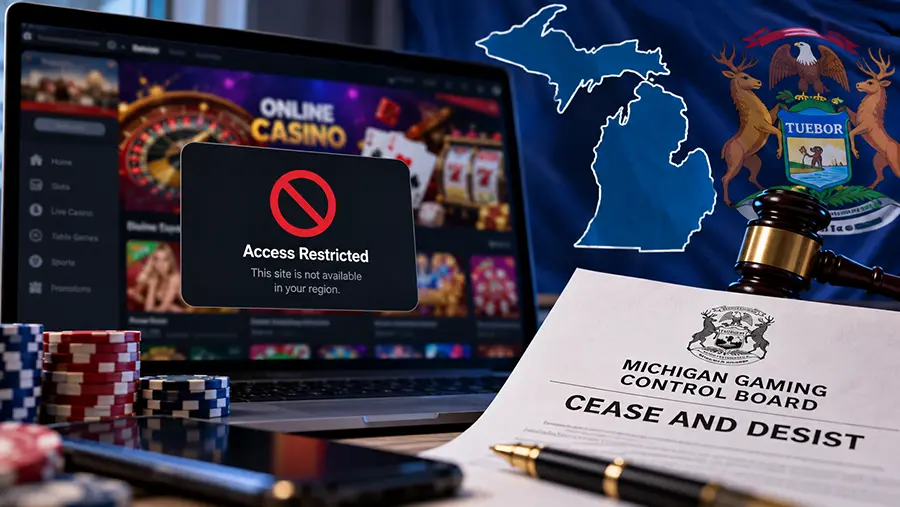
Michigan has sent another 33 cease and desist letters to offshore gambling sites, and this batch includes names a lot of our readers will recognize: Raging Bull Slots, Sloto’Cash, mBit Casino, iWild Casino and Regal Casino and Sportsbook among them.
The Michigan Gaming Control Board announced the letters on October 8, saying its investigators found each operator offering casino games, sweepstakes style play or sports betting to people in Michigan without a state license. It follows 45 similar letters announced in April, and the question is the same one it was then: what happens when a company in Curacao or Costa Rica gets a letter from Lansing?
Who is on the list
A mix of long-running offshore casinos, crypto sites, sportsbooks and sweepstakes operators. Alongside Raging Bull, Sloto’Cash, mBit, iWild and Regal, the board named Ronin Slots, Slot Paradise, Spin Dinero, Sloto Tribe, Stardust, SunnySpins Casino and The Online Casino, plus a long tail of smaller brands.
Each has been told to stop offering casino games, sports bets or sweepstakes products to Michigan residents, with a warning that ignoring the letter can bring in the state Attorney General. Getting a letter and leaving Michigan are two different things, and the announcement does not say that any of the 33 has blocked the state, closed accounts or stopped taking deposits.
The campaign so far
In April the board said it had sent cease and desist orders to 45 offshore operators over the previous four months, a list that included BetOnline.ag, SportsBetting.ag and Americas Cardroom. Everygame and Super Slots have been targeted before that.
So this is not a sweep of fly-by-night sites. Michigan is going after brands that have taken American players for a decade or more, many of them holding licenses in Curacao or elsewhere. The state’s position is simple: a Curacao license is not a Michigan license. The Lawful Internet Gaming Act and Lawful Sports Betting Act require state authorization, and nothing issued abroad substitutes for it.
Why the board keeps mentioning self exclusion
The October 8 statement leans hard on one point. Michigan runs a self exclusion database for online gambling, and every licensed operator has to honor it. Offshore sites are not connected to it. A person who has put themselves on the state’s list can still open an account at any of the 33 sites named, deposit, and play.
Some offshore casinos run their own limit and exclusion tools, but they are not linked to Michigan’s system and the state cannot make them comply. The board also points out that players at unlicensed sites cannot bring a withheld withdrawal to the Gaming Control Board the way they can with a licensed operator. For a player who has had a payout stall at an offshore casino, that is the difference that matters.
What a letter can and cannot do
Michigan can regulate gambling inside its borders. It cannot switch off a website hosted abroad. A cease and desist letter puts the operator on notice and builds the record for whatever comes next. Beyond that, it relies on the operator choosing to geoblock the state or close accounts, and plenty will not.
Where states have real leverage is payments and business partners with a US presence. The October announcement does not mention any action against processors or ISPs, so for now the pressure is the letter itself. That makes the number to watch not how many letters go out, but how many of the named sites actually stop serving Michigan, and the board has not published that.
The size of the problem
The American Gaming Association estimated in August 2025 that Americans bet around $673.6 billion a year through illegal and unregulated channels, offshore sites included. The same report put the share of online casino players who use only legal operators at 24%, down from 52% in 2022. Those are industry-commissioned figures, so treat them as a rough scale rather than a count, but they explain why state regulators are running campaigns like this one. Two 2026 estimates point the same way: Gaming Compliance International put US losses at unlicensed sites at $97.4 billion in 2025, and Blask has offshore brands taking about two thirds of US online gambling.
If you play at one of these sites from Michigan
Expect some of them to restrict Michigan accounts in the coming weeks and others to carry on as if nothing happened. If you have a balance, read any notices from the casino and consider withdrawing it, because what happens to funds at a site that decides to leave depends entirely on that site’s terms. The regulator has not said accounts are being frozen.
The larger message from Lansing is that being an established brand buys no exemption. Whether the campaign changes anything on the ground will be decided by what the 33 operators do now the letters have landed, and that is the part Michigan has yet to show.
Last Updated: 11 hours ago


