The legitimacy of one of the offshore gambling industry’s fastest growing licensing jurisdictions is facing serious questions after the government of the Comoros, a small island nation in the Indian Ocean, off the southeastern coast of Africa, challenged the authority of organizations issuing online casino licenses under the name of Anjouan. Anjouan, an island in the Comoros archipelago between Madagascar and mainland Africa.
An investigation published by The Guardian on October 19 revealed that Comorian authorities are preparing legal action against what they describe as an unauthorized licensing network. The government has also requested assistance from British authorities after identifying individuals in the United Kingdom allegedly connected to the operation.
The dispute could have significant implications for offshore gambling. Nearly 1,500 gaming license holders appear on Anjouan’s public register, including international casino operators and cryptocurrency gambling platforms. Many of these businesses use their Anjouan licenses to demonstrate regulatory oversight to players, payment providers and commercial partners.
The central question is whether the organizations issuing those licenses have the legal authority they claim. The Comoros government disputes that authority, while the Anjouan licensing organizations continue to present themselves as legitimate regulators operating under local law.
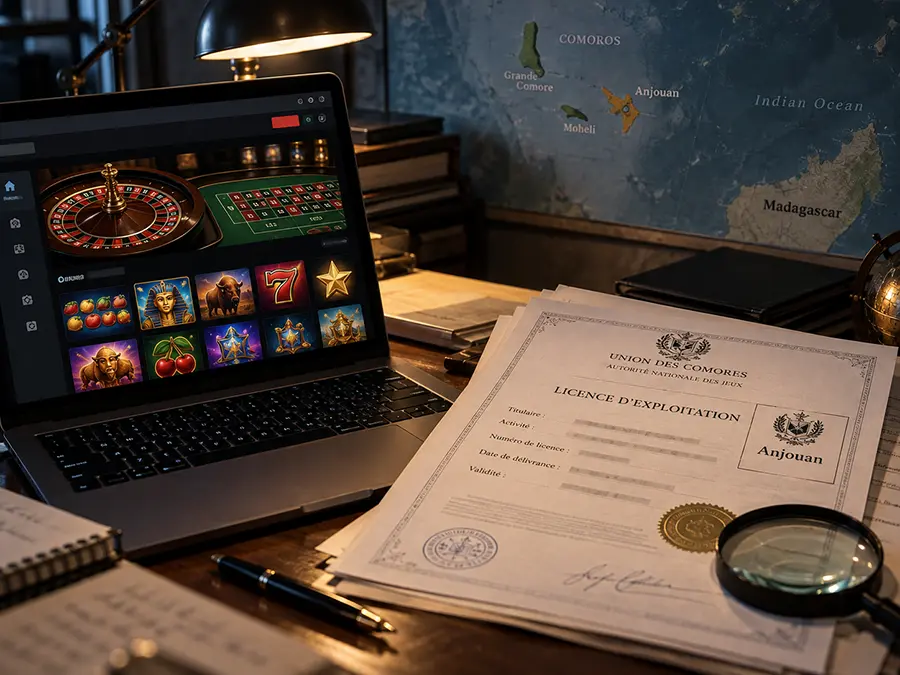
Comoros Government Challenges Anjouan’s Licensing System
Anjouan is an island within the Union of the Comoros, a small country in the Indian Ocean between Madagascar and Mozambique. Although the island has a relatively small population, its name has become increasingly familiar in the international online gambling industry.
Over the past several years, Anjouan has attracted casino operators seeking an alternative to more established licensing jurisdictions such as Curaçao. Its licensing process has generally been marketed as relatively inexpensive and straightforward, making it particularly appealing to smaller operators and cryptocurrency casinos.
However, the national government is now challenging the legal basis of the organizations behind that system.
According to The Guardian’s investigation, the Central Bank of the Comoros described the offshore licensing network as unauthorized and accused those involved of using the country’s name to create an appearance of legitimacy.
Comorian officials say they are preparing judicial action within the country while pursuing international cooperation involving financial intelligence and law enforcement. The government has also requested assistance from British authorities concerning individuals allegedly involved in the licensing arrangements.
These are serious allegations, but they remain allegations. The investigation does not establish that a court has invalidated every Anjouan gambling license or that all operators holding those licenses have engaged in wrongdoing.
Why Anjouan Has Become Popular With Offshore Casinos
The controversy comes at a time when the international casino licensing market is undergoing significant changes.
For years, Curaçao was one of the most recognizable licensing jurisdictions for offshore casinos serving customers across multiple countries. Its licensing system was relatively accessible, particularly under the former master license and sublicense arrangement.
That system has changed substantially.
Curaçao’s regulatory reforms introduced direct licensing, expanded compliance requirements and greater scrutiny of company ownership, financial arrangements and responsible gambling practices. These changes have increased the administrative demands placed on operators seeking to maintain authorization.
Anjouan has emerged as one of the alternatives.
The Guardian reported that Anjouan Corporate Services advertised licensing assistance for approximately £19,000. An industry source quoted in the investigation contrasted the cost with approximately £80,000 for a Curaçao license, although actual licensing and compliance costs vary depending on the operator and services required.
For smaller online casinos, the difference can be substantial. Licensing costs are only one part of operating a gambling website, but they can influence where businesses choose to establish themselves.
The concern is whether lower costs are accompanied by meaningful regulatory oversight. A license is supposed to establish that an operator meets certain standards, but its value depends on the authority and effectiveness of the organization issuing it.
London Businesses Linked to Licensing Network
The Guardian’s investigation also examined connections between Anjouan’s licensing arrangements and businesses operating in the United Kingdom.
One company identified in the reporting is ACS Global Custodian, which is associated with Anjouan Corporate Services. British corporate records connect the company to members of the Sorsky family, who have also been involved in the London based Sherm Group.
The investigation reported that Anjouan Corporate Services marketed assistance with offshore licensing applications, while publicly available materials connected the business to individuals based in Britain.
However, the company’s representatives dispute the suggestion that it currently sells gambling licenses.
Harold Sorsky told The Guardian that ACS Global Custodian has not sold, issued or otherwise provided gaming licenses since the company was taken over in 2023. He said references to its involvement in gambling licensing were outdated and that another service provider had assumed those responsibilities.
The distinction matters because the existence of business relationships or historical involvement does not establish responsibility for licenses issued today.
Comorian authorities say British citizens have been identified in connection with the disputed licensing arrangements, but no final legal determination concerning the individuals or businesses named in the investigation has been established.
Nearly 1,500 License Holders Could Be Affected
The scale of Anjouan’s licensing system makes the dispute particularly significant.
According to the public register examined by The Guardian, nearly 1,500 gambling license holders are listed under the Anjouan Gaming Authority. The register includes operators incorporated in jurisdictions such as Panama, Belize and Costa Rica, along with businesses serving international online gambling markets.
Among the better known names associated with Anjouan licensing is BC.Game, a cryptocurrency gambling platform that has attracted attention through international sponsorships and marketing.
The register also includes numerous smaller casinos that are less familiar to mainstream gambling audiences.
It is important to distinguish between the number of license holders and the number of individual casino websites. A single company may operate multiple gambling brands, while other license holders may provide business services rather than directly accept wagers from players.
The figure therefore should not be interpreted as evidence that 1,500 separate online casinos are actively operating.
Still, the size of the register illustrates how widely the Anjouan licensing system has been adopted. If the legal authority behind those licenses is successfully challenged, the consequences could extend well beyond a handful of operators.
What Does an Anjouan License Actually Provide?
For players, the most important question is what protections an Anjouan license provides and who is responsible for enforcing them.
A gambling license generally serves several purposes. It identifies the company responsible for operating a casino, establishes rules the operator is expected to follow and provides some form of regulatory accountability.
Depending on the jurisdiction, those requirements may include financial checks, anti money laundering procedures, game testing, responsible gambling measures and mechanisms for handling player complaints.
Anjouan Gaming presents its licensing system as a regulatory framework with requirements for operators. However, the national government’s challenge raises questions about the legal foundation supporting that framework.
The existence of a public license register does not necessarily resolve those questions. A website can display a license number and appear on a regulatory database, but that information is only as meaningful as the authority behind it.
There is also a separate issue involving where an operator accepts customers.
An Anjouan license does not automatically authorize a casino to serve players in countries that require their own gambling licenses. An operator accepting customers in Michigan, for example, would still need to comply with Michigan’s licensing requirements, regardless of whether it holds authorization from Anjouan.
Anjouan Gaming has previously acknowledged that its licenses do not provide universal permission to operate in every country.
That distinction applies to offshore gambling licenses generally, not just Anjouan.
Investigation Raises Questions About Player Protections
The Guardian’s investigation also examined the experience of players using casinos licensed through Anjouan.
In one test, a reporter registered with SlotsCharm and placed wagers before stopping. According to the investigation, the casino subsequently contacted the reporter more than 100 times through telephone calls and emails containing gambling promotions and incentives.
A representative of the casino defended its practices, describing the operation as governed by its internal rules.
The investigation also identified Anjouan licensed websites promoted to British customers seeking gambling platforms outside the United Kingdom’s GamStop self exclusion system.
GamStop allows people to exclude themselves from gambling websites licensed by the UK Gambling Commission. Offshore operators without British licenses are not part of that system, creating an opportunity for excluded players to access gambling services elsewhere.
That does not mean every Anjouan licensed casino targets vulnerable customers or ignores responsible gambling obligations. Operators have different policies, and some provide voluntary account restrictions or exclusion tools.
However, the examples raise questions about how effectively player protection standards are monitored and enforced, particularly when the legal standing of the licensing authority itself is disputed.
For players, the practical concern is what happens when a casino refuses a withdrawal, closes an account or fails to honor its published terms. A licensing authority is most useful when it can investigate complaints and require operators to comply with its decisions.
Could the Dispute Affect Payments and Casino Software?
The potential consequences extend beyond casino operators and their customers.
Payment processors, software providers, affiliate businesses and other commercial partners frequently consider licensing status when deciding whether to work with gambling companies.
An offshore casino may use its license to demonstrate that it operates within a recognized regulatory framework. That can be particularly important when establishing payment processing arrangements or securing access to casino game suppliers.
If the authority behind Anjouan licenses remains disputed, those commercial partners may face additional questions about whether the documentation satisfies their compliance requirements.
The Guardian quoted gambling industry analyst Alun Bowden of Eilers & Krejcik Gaming, who explained that licensing can provide reassurance to players and businesses working with casino operators.
That reassurance becomes more difficult to evaluate when the national government challenges the organization issuing the licenses.
However, there is currently no verified evidence that payment providers or major casino software companies have collectively stopped accepting Anjouan licensed operators because of the latest investigation.
Whether commercial partners change their policies will depend on how the legal dispute develops and whether regulators or financial institutions take additional action.
What Happens Next for Anjouan Licensed Casinos?
The immediate question is whether the Comoros government can successfully challenge the licensing network through domestic legal proceedings or international cooperation.
Officials have indicated that judicial action is being prepared, and the government has sought assistance from British authorities. However, the investigation does not establish that a court has issued an order shutting down the licensing system or that existing certificates have been formally revoked.
Operators holding Anjouan licenses therefore face uncertainty rather than an immediate, universally applicable shutdown.
Some businesses may continue operating under their existing arrangements while monitoring the dispute. Others may consider alternative licensing jurisdictions, particularly if payment providers or commercial partners begin requesting additional evidence of regulatory authorization.
For established offshore casinos, obtaining a different license can involve substantial expense, changes to corporate structures and additional compliance requirements. Smaller operators may find those costs more difficult to absorb.
The situation also highlights a broader issue in offshore gambling regulation. As licensing jurisdictions introduce stricter requirements, some operators may seek alternatives offering lower costs and simpler approval processes.
That creates competition between jurisdictions, but it also makes the credibility of licensing authorities increasingly important.
Anjouan has grown into a significant offshore gambling licensing destination. The latest investigation raises questions about whether the legal and regulatory framework supporting that growth is as established as operators and players have been led to believe.
The Comoros government has now made its objections public and is seeking international assistance. Until those disputes are resolved, casinos holding Anjouan licenses, their commercial partners and the players using those websites will have to assess what that authorization actually guarantees.
Last Updated: 7 hours ago