The NBA is restricting several types of player prop bets ahead of the 2026-27 season as the league responds to gambling scandals involving current and former players. The changes will affect major sportsbooks, including DraftKings and FanDuel, and remove betting markets the league believes are particularly vulnerable to manipulation.
The restrictions were announced October 16, just days before the NBA regular season begins on October 20. They target wagers involving individual player statistics, limited playing time and specific events during games, including opening tipoffs and first baskets.
The decision follows federal gambling investigations involving former NBA players Jontay Porter and Terry Rozier. Both cases raised concerns about how bettors could profit from advance knowledge of a player’s performance or availability, particularly when wagering on statistics that fall below a sportsbook’s projected totals.
The NBA is not eliminating player prop betting entirely. Instead, the league is working with its authorized sportsbook partners to remove specific markets that could be influenced by an individual player without necessarily changing the outcome of a game.
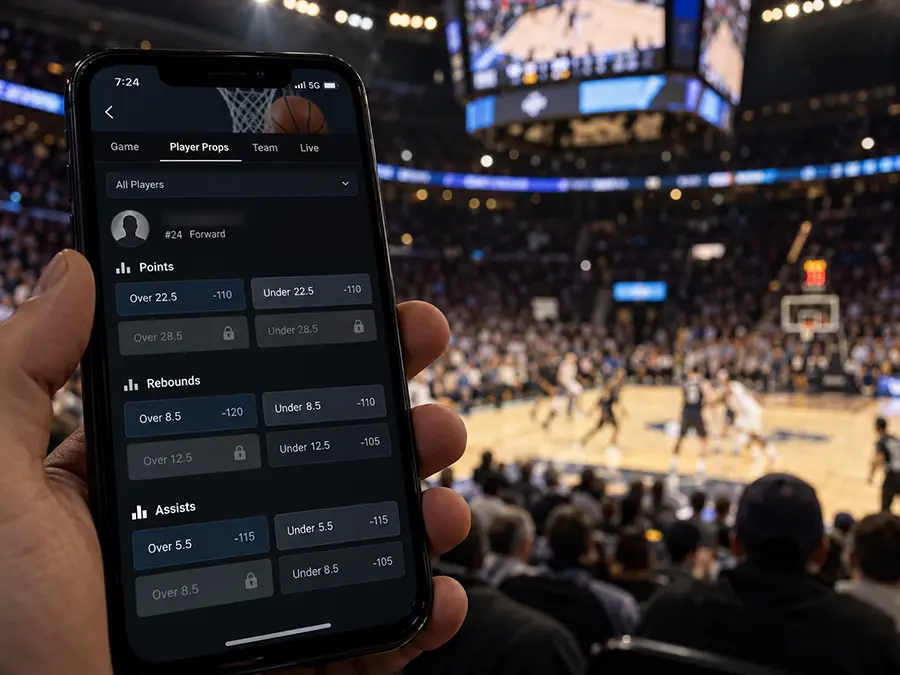
Which NBA Player Prop Bets Are Being Banned?
The new restrictions focus on wagers that the NBA considers especially susceptible to manipulation. Many involve events that can be influenced by a single player, such as leaving a game early, missing a particular shot or failing to reach an expected statistical total.
According to league memos obtained by multiple news organizations, the following betting markets will no longer be permitted through participating sportsbooks:
- Same-player under parlays: Parlays combining multiple under bets on the same player’s statistics, such as points, rebounds and assists.
- Limited-minute player unders: Under bets involving players expected to play fewer than 12 minutes in a game.
- First-event wagers: Bets on who will score the first basket, record the first rebound, make the first three-pointer or produce other first statistical events.
- Opening tipoff bets: Wagers on which team or player will win the opening tip.
- Specific missed-shot wagers: Bets on whether a player will miss a particular shot attempt or miss within a specified period.
- Certain alternative under lines: Under bets offering unusually large payouts because the statistical threshold is significantly lower than the standard line.
These restrictions build on existing NBA limitations involving certain players on short-term contracts, turnovers, fouls and missed free throws.
For bettors, the changes will be most noticeable in player prop and same game parlay menus. Traditional wagers on game winners, point spreads, totals and many individual player statistics will remain available.
For example, a sportsbook may still offer a wager on whether a player scores more or fewer than 25.5 points. However, combining several unders on that same player’s statistics into one parlay will no longer be permitted under the new rules.
The distinction is important because the NBA is targeting particular combinations and types of wagers rather than removing the broader player prop market.
Jontay Porter Scandal Helped Drive the Changes
The restrictions are closely connected to the gambling scandal involving former Toronto Raptors player Jontay Porter, who received a lifetime NBA ban in April 2024.
The league determined that Porter disclosed confidential information about his health to a known sports bettor and limited his own participation in at least one game for gambling purposes. He also placed wagers on NBA games, violating league rules.
Porter later pleaded guilty to conspiracy to commit wire fraud in federal court.
The case demonstrated how a player could potentially influence the outcome of certain prop bets without affecting which team won the game. If a player knows he will leave early, his points, rebounds and assists could all finish below the sportsbook’s projections.
That creates an opportunity for bettors with inside information to combine multiple statistical unders into a single wager offering a larger payout.
The NBA’s new restrictions directly address that vulnerability by prohibiting parlays built around several unders involving the same player.
However, the rules cannot eliminate every possibility of manipulation. A player could still influence individual statistical outcomes, and suspicious betting activity can occur in markets that remain available.
The league’s approach is to reduce exposure to the betting products it considers most vulnerable while maintaining access to other regulated wagering markets.
Terry Rozier Investigation Raises Similar Concerns
The NBA has also faced questions following the federal gambling investigation involving former Miami Heat guard Terry Rozier.
Federal prosecutors allege that Rozier shared information about his planned early departure from a March 2023 game while playing for the Charlotte Hornets. According to the allegations, associates used that information to place wagers on his statistical performance.
Rozier played fewer than 10 minutes in the game, and the unusual betting activity attracted attention.
He has pleaded not guilty and denied wrongdoing. The allegations against him should not be treated as established facts.
The case nevertheless illustrates why the NBA is restricting unders involving players expected to receive limited minutes. These markets can be particularly sensitive to information about injuries, playing time and availability that may not be publicly known.
Sportsbooks already adjust player prop lines based on injury reports and projected minutes. However, those systems cannot necessarily account for undisclosed information about a player’s intention to leave a game early.
By removing certain wagers involving limited minute players, the league hopes to reduce opportunities for individuals to profit from information that other bettors do not have.
DraftKings and FanDuel Among Sportsbooks Affected
The restrictions apply to the NBA’s authorized gambling operators and sportsbook partners, including DraftKings and FanDuel.
Other major sportsbooks with league agreements are also expected to comply. The NBA estimates that operators covered by its commercial relationships account for more than 99% of the regulated U.S. sports betting market.
That gives the league substantial influence over which NBA betting products are offered through licensed sportsbooks.
Unlike state gambling regulations, these restrictions are being implemented through agreements between the NBA and its betting partners. The league can establish conditions governing how its games and official data are used by participating operators.
For sportsbooks, removing certain prop markets could reduce the number of available betting combinations, particularly in same-game parlays.
Those products have become an important part of the sports betting industry because they allow customers to combine several outcomes into a single wager. The potential payouts can be attractive to bettors, while sportsbooks generally benefit from the margins associated with parlay betting.
The NBA appears willing to accept some reduction in available betting markets to address concerns about competitive integrity.
That decision also reflects the financial relationship between professional sports leagues and gambling operators. Sports betting partnerships have become an important commercial opportunity, but gambling scandals can damage confidence in both the games and the betting products associated with them.
What About Offshore Sportsbooks?
The NBA’s new betting restrictions primarily affect sportsbooks operating under commercial agreements with the league, including major licensed U.S. operators such as DraftKings and FanDuel. Offshore sportsbooks, including Bovada, BetOnline and SportsBetting.ag, are not automatically subject to those same contractual restrictions.
That does not necessarily mean offshore sportsbooks will continue offering the prohibited wagers. Individual operators can choose to remove certain betting markets, and their available options may change as the industry responds to the NBA’s new policies. However, the league has less direct control over sportsbooks that operate outside its official partnerships.
The distinction is important for bettors because the availability of certain NBA player props could differ between state-licensed sportsbooks and offshore operators. The NBA’s announcement does not represent a universal ban on these wagers across every betting platform.
Prediction Markets Present a Different Challenge
One of the more complicated questions involves prediction markets offering sports-related event contracts.
Platforms such as Kalshi operate under a different regulatory framework from traditional state-licensed sportsbooks. Rather than offering conventional sports wagers under state gambling licenses, these platforms generally describe their products as event contracts regulated at the federal level.
That distinction has become the subject of legal disputes involving state gambling regulators, federal authorities and prediction market operators.
The NBA’s latest restrictions do not automatically extend to independent prediction market platforms that lack commercial agreements with the league.
This creates a potential gap in how the new rules are enforced.
A particular betting market could be removed from DraftKings or FanDuel while a similar event contract remains available through another platform, depending on the contracts that platform offers and the legal restrictions applicable to it.
That does not establish that prediction markets currently offer every type of wager the NBA has prohibited. Nor does it mean that those platforms are exempt from all gambling-related restrictions. Their legal status remains contested in several jurisdictions.
However, the difference in regulatory structures complicates the NBA’s ability to apply consistent integrity standards across the broader market.
The league can directly influence its commercial sportsbook partners, but it has less control over independent businesses operating outside those agreements.
As sports prediction markets continue expanding, that distinction could become increasingly important.
NBA Expands AI Monitoring and Gambling Education
The betting restrictions are part of a broader effort to strengthen the NBA’s gambling integrity policies.
The league is introducing an artificial intelligence-based monitoring system designed to identify unusual betting activity by examining wagering patterns alongside information such as injury reports and social media activity.
The goal is to identify potentially suspicious activity that might otherwise be difficult to detect through traditional monitoring.
The NBA and sportsbooks have already used integrity monitoring systems for years, but the latest initiative is intended to expand those capabilities.
The league is also requiring players, coaches and training personnel to participate in live, in-person education sessions covering sports betting rules.
These sessions are designed to reinforce restrictions on gambling, sharing confidential information and other conduct that could compromise the integrity of NBA games.
The NBA is also strengthening protections against harassment from bettors. Players have increasingly reported receiving abusive messages and threats from individuals upset about losing wagers, particularly those involving player statistics.
New measures include tools to identify and remove threatening social media content and updates to the league’s fan code of conduct.
Separately, the NBA and WNBA announced a responsible gambling campaign in partnership with the National Council on Problem Gambling. The campaign will educate fans, particularly younger adults, about risks associated with both traditional sports betting and prediction markets.
The WNBA is also expected to adopt the NBA’s latest betting market restrictions beginning in 2027.
What the New Rules Mean for NBA Bettors
The immediate impact for most bettors will be fewer options in certain player prop markets.
Someone looking to place a traditional wager on a team’s moneyline, point spread or game total should see little change. Many conventional player props will also remain available, although specific markets and combinations will be restricted.
The biggest adjustments will involve same-game parlays and wagers tied to individual events or players with limited expected playing time.
For sportsbook operators, the restrictions may require changes to betting menus, parlay construction systems and the way certain player statistics are priced.
The broader impact will depend on whether the changes reduce opportunities for manipulation and whether other leagues adopt similar restrictions.
The NBA has already demonstrated that it can remove problematic markets through its commercial partnerships. What remains less clear is whether comparable protections can be extended across a sports betting industry that now includes traditional sportsbooks, offshore operators and federally regulated prediction markets.
The league’s latest decision reflects a growing recognition that not all betting markets carry the same integrity risks. A wager on the final score of a basketball game is fundamentally different from a wager on whether one player misses a specific shot or leaves a game before reaching a statistical threshold.
The NBA is drawing a clearer line between those products as it attempts to prevent another gambling scandal.
With the 2026-27 season beginning October 20, the restrictions will provide an early test of whether limiting certain player props can strengthen betting integrity without substantially changing the experience for most sports bettors.
Last Updated: 1 hour ago