
- U.S. commercial sportsbooks handled $166.94 billion in wagers in 2025 and generated $16.96 billion in revenue.
- As of December 2025, 31 states and Washington, D.C. allowed online sports betting.
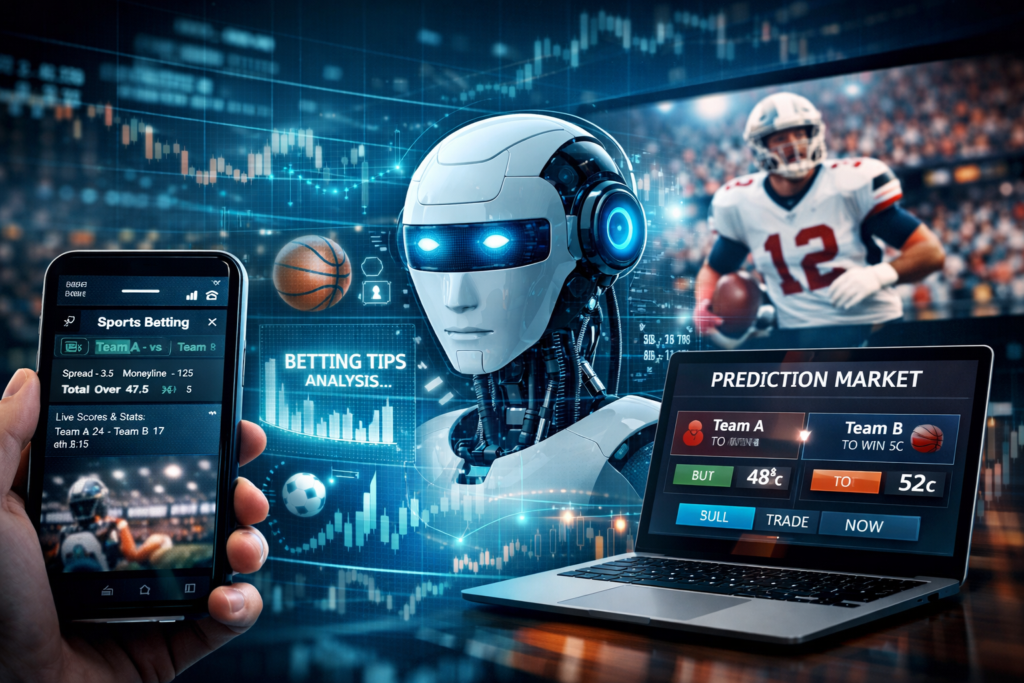
AI Starts Reaching Sports Bettors as Prediction Markets Grow
Artificial intelligence is starting to move from the background of sports betting into the betting experience itself. Tools that summarize matchup data, surface player stats, and organize betting angles are becoming easier to access, while sportsbooks and prediction-market platforms are building AI-driven features directly into their products.
One of the clearest signs of that shift came in March 2025, when FanDuel launched AceAI and described it as the industry’s first generative AI sports betting chat experience. The product was built to help users research bets, review stats, and build same game parlays inside the app, showing that major operators now view AI as part of the sportsbook experience rather than just an outside tool bettors use on their own.
That development is happening in a betting market that is already operating at massive scale. U.S. commercial sportsbooks handled $166.94 billion in wagers in 2025 and generated $16.96 billion in revenue, according to the American Gaming Association’s commercial gaming revenue tracker. Those figures show how quickly the market has grown and why new betting tools are drawing attention from both operators and regulators.
Prediction markets are expanding alongside that trend. As of December 2025, 31 states and Washington, D.C. allowed online sports betting, while prediction markets continued to grow in ways that may broaden access to sports-related speculation beyond traditional sportsbook models. That overlap is part of why AI is becoming more relevant. These platforms rely on fast-moving information, shifting probabilities, and real-time reactions to sports news, all of which make them natural targets for AI-assisted research and decision-making.
For bettors, the appeal is obvious. AI can cut down the time it takes to scan injuries, compare trends, organize data, and understand market movement. But faster research is not the same as a real edge. AI may help users process information more efficiently, but it does not remove uncertainty, and it does not guarantee better outcomes.
The bigger story is that sports betting and prediction markets are becoming more data-driven at the same time AI tools are getting easier to use. Sportsbooks want users to stay inside the app while they research. Prediction markets are turning probabilities into products. And bettors are getting used to machine-assisted shortcuts before they place a wager. The technology is changing quickly, even if the underlying risk is not.
Last Updated: 3 days ago